Resources

Books


Black-and-white book cover showing hands cuffed on the floor, titled “Mills Redemption”

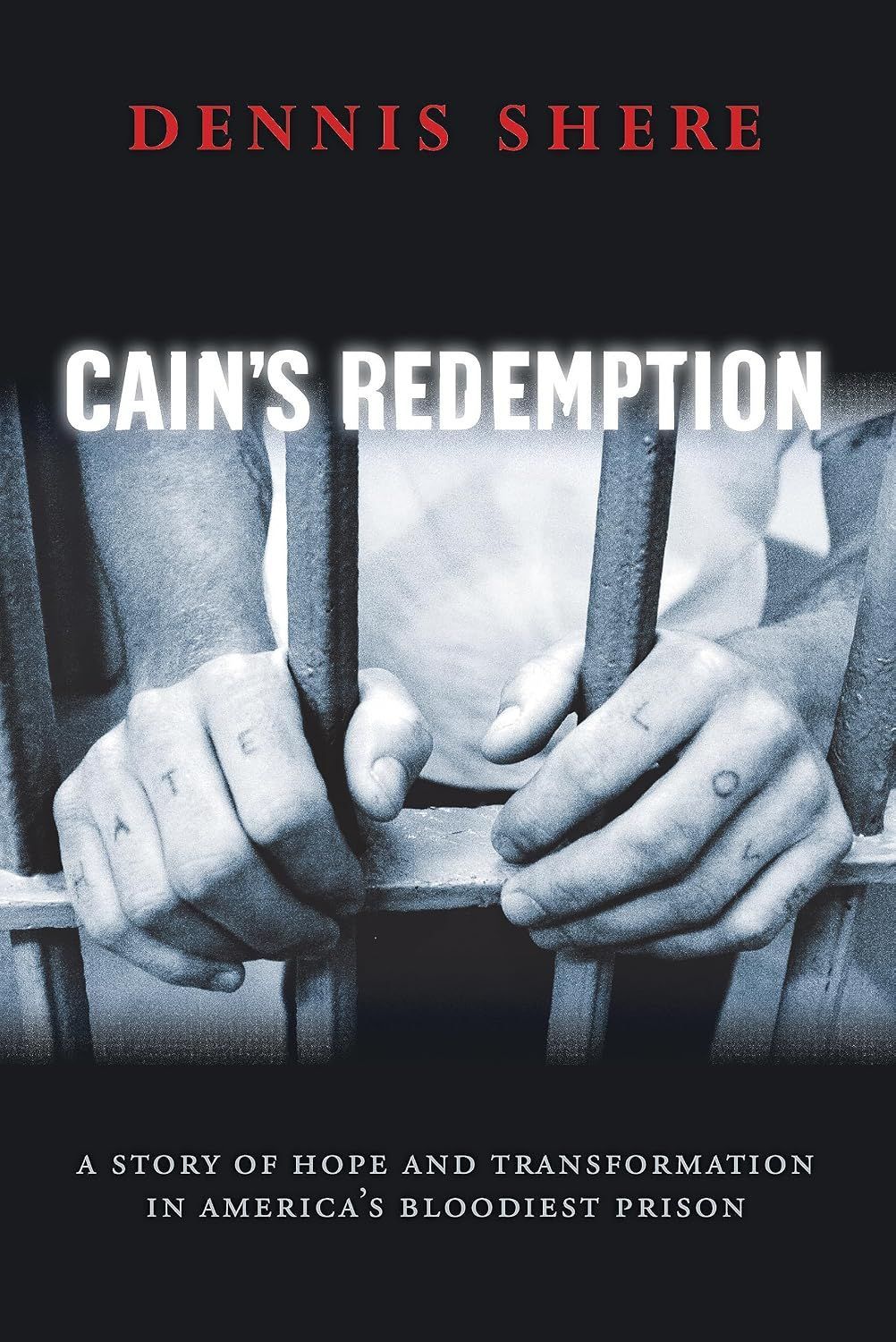
Cain’s Redemption

Formerly known as America's bloodiest prison, the 18,000 acres that comprise Louisiana's Angola State Penitentiary are now home to 5,000 inmates, a full range of seasonal crops, a 9-hole golf course, yearly rodeos, a Bible seminary, a museum, and much more. All of this came into being at the behest of Warden Burl Cain, who is now the longest-standing warden in the history of Angola prison. Under his leadership, the inmate population of 5,000 has gone from regular knife fights to Bible studies. Cain is a strong believer in the ability of the gospel to turn the most incorrigible of sinners into productive, moral citizens. Because eight out of ten prisoners are serving life sentences without parole at Angola, Cain has taken upon himself the task of making the lives of these prisoners productive and educational. Through a partnership with New Orleans Baptist Seminary, prisoners have the opportunity to get a bible degree and even be transferred to other prisons as a missionary.


The Angola phenomenon has been covered by such media outlets as Time Magazine, Christianity Today, and in the award-winning film documentary, The Farm: Angola, USA. Author Dennis Shere combines his background in journalism and law to bring readers this account of redemption and life change in the most unlikely of places: a maximum security prison.
BUY ON AMAZON →

Blue hardcover book titled “The Public Auto,” shown at an angle on a white background

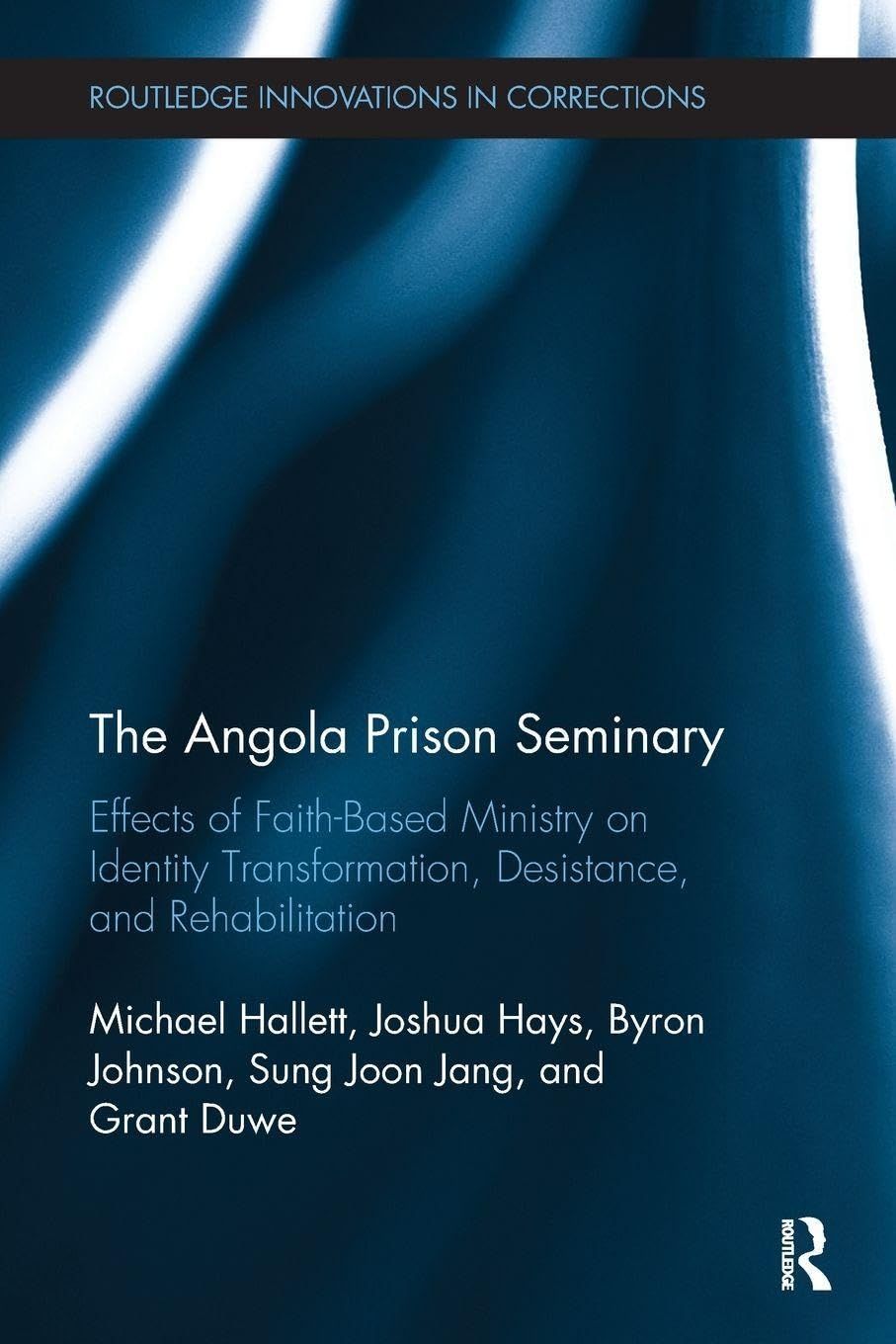
The Angola Prison Seminary

Corrections officials faced with rising populations and shrinking budgets have increasingly welcomed "faith-based" providers offering services at no cost to help meet the needs of inmates. Drawing from three years of on-site research, this book utilizes survey analysis along with life-history interviews of inmates and staff to explore the history, purpose, and functioning of the Inmate Minister program at Louisiana State Penitentiary (aka "Angola"), America’s largest maximum-security prison. This book takes seriously attributions from inmates that faith is helpful for "surviving prison" and explores the implications of religious programming for an American corrections system in crisis, featuring high recidivism, dehumanizing violence, and often draconian punishments.


A first-of-its-kind prototype in a quickly expanding policy arena, Angola’s unique Inmate Minister program deploys trained graduates of the New Orleans Baptist Theological Seminary in bi-vocational pastoral service roles throughout the prison. Inmates lead their own congregations and serve in lay-ministry capacities in hospice, cell block visitation, delivery of familial death notifications to fellow inmates, "sidewalk counseling" and tier ministry, officiating inmate funerals, and delivering "care packages" to indigent prisoners. Life-history interviews uncover deep-level change in self-identity corresponding with a growing body of research on identity change and religiously motivated desistance. The concluding chapter addresses concerns regarding the First Amendment, the dysfunctional state of U.S. corrections, and directions for future research.


BUY ON AMAZON →

Book cover titled “EXILES” with red spine and abstract black circular line art on a white background

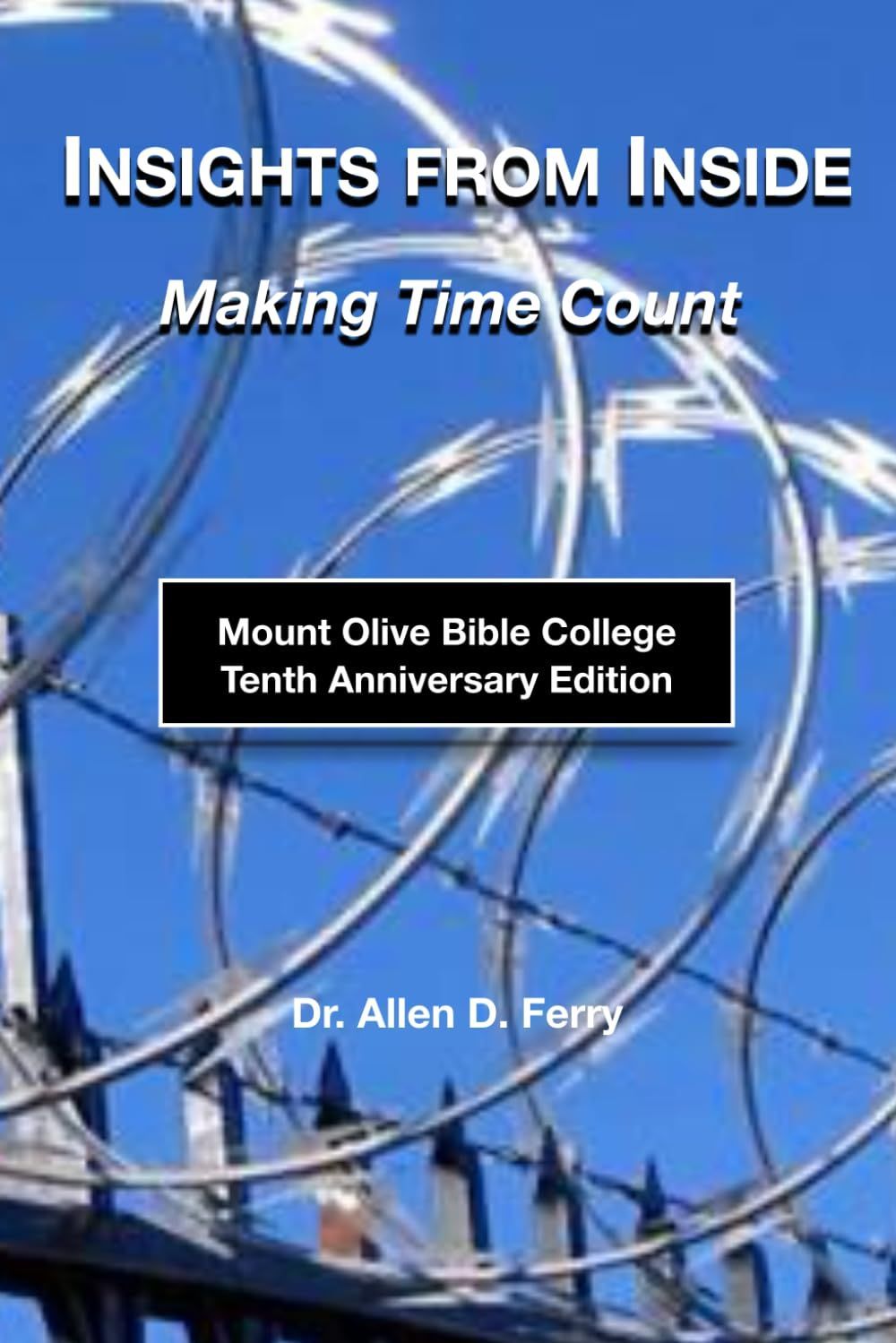
Insights from Inside: Making Time Count

The book relates a decade of stories and testimonies about life change and the impact of the program on students, staff, and teachers. This ministry has been a partnership between the West Virginia Division of Corrections & Rehabilitation, Catalyst Ministries, and Appalachian Bible College.


“The majority of those graduating from the Bible College won’t be getting out; they will stay inside the system and help transform the system form the inside out. Inmates listen to their own; they give far great credence to the voice of their own than they to do the voices of the free-world volunteers. Inmates tend to look at the inmate minister as one of their own. They are more receptive to the Christian message because they look at the minister and know he is in there with them. This has proven to be more effective that if some stranger comes in from the outside and tries to minister to them.”


“The Bible College students, upon Graduation, will be sent to other West Virgina prisons in the state, where they will serve on the staff of the prison Chaplains. They will assist those Chaplains in their individual prison ministries. Their very presence will begin to change the culture of the prison to which they were assigned.”


BUY ON AMAZON →

Book cover titled “EXILES” with red spine and abstract black circular line art on a white background

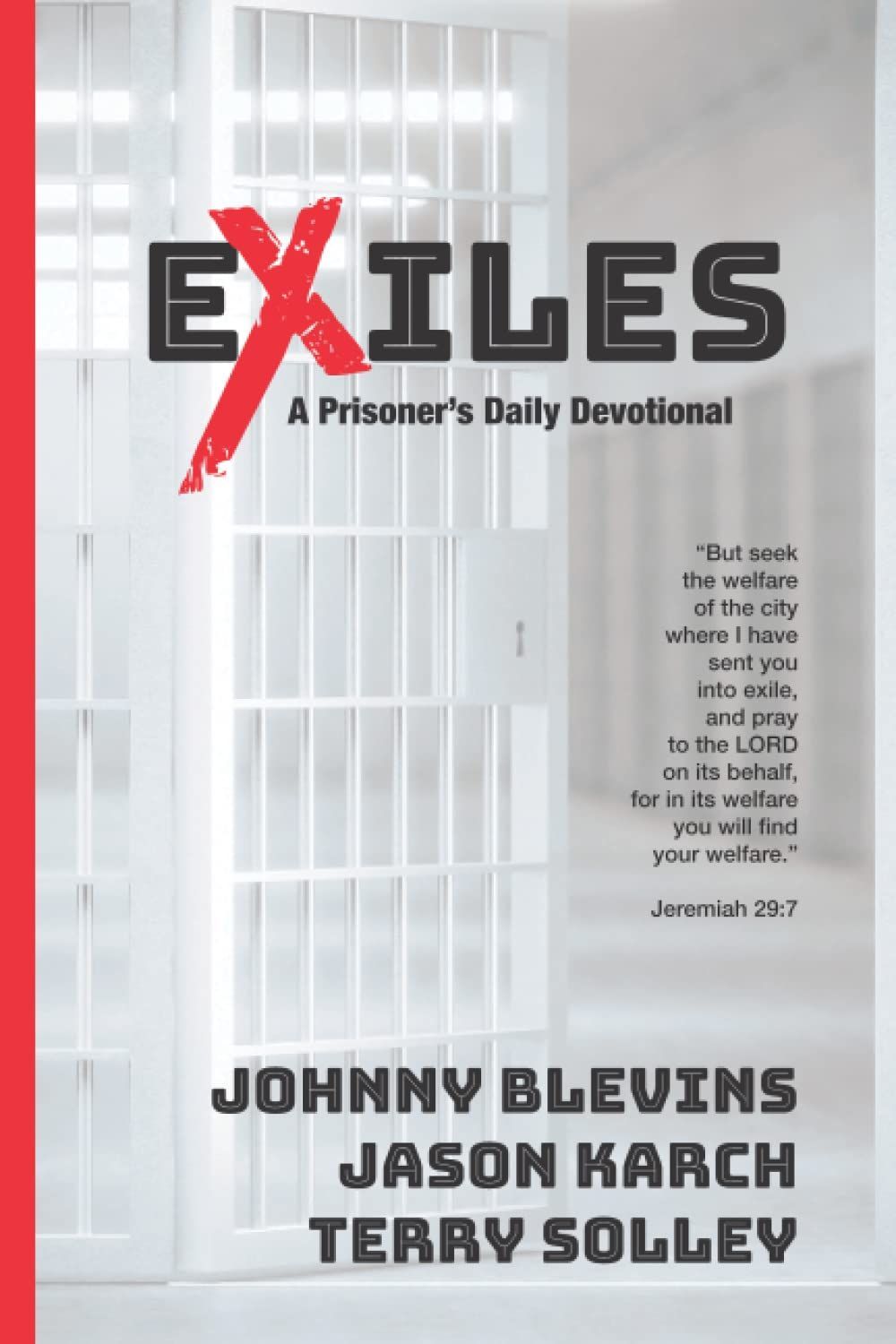
Exiles: A Prisoner’s Daily Devotional

When you purchase the paperback version of Exiles, the Kindle version is FREE for you to download. All proceeds from the sale of Exiles go to a non-profit the authors have selected that gives academic scholarships to children of inmates. Exiles is a Christian Devotional Book written by inmates for inmates. Exiles will bless inmates and free-world people alike, making its way into both kinds of prisons—spiritual and physical—something we all know well. The practice of having Christian devotions is a way of practicing the spiritual disciplines of quietness and solitude and Bible reading so that a person can live out his or her day with the mind of Christ. Each page of this devotional book represents a day in the calendar year and includes a verse or two of Scripture, three to four short paragraphs about the Scripture applicable to a prison context, then a brief listing for further Bible reading. The authors are pursuing the Bachelor of Science in Biblical Studies at the Southwestern Seminary at Darrington, a four-year accredited degree through the Southwestern Baptist Theological Seminary inside of the maximum security Darrington Prison Unit.


BUY ON AMAZON →

Book cover reading “You Can Change,” with birds flying over a sunrise sky and tree silhouettes

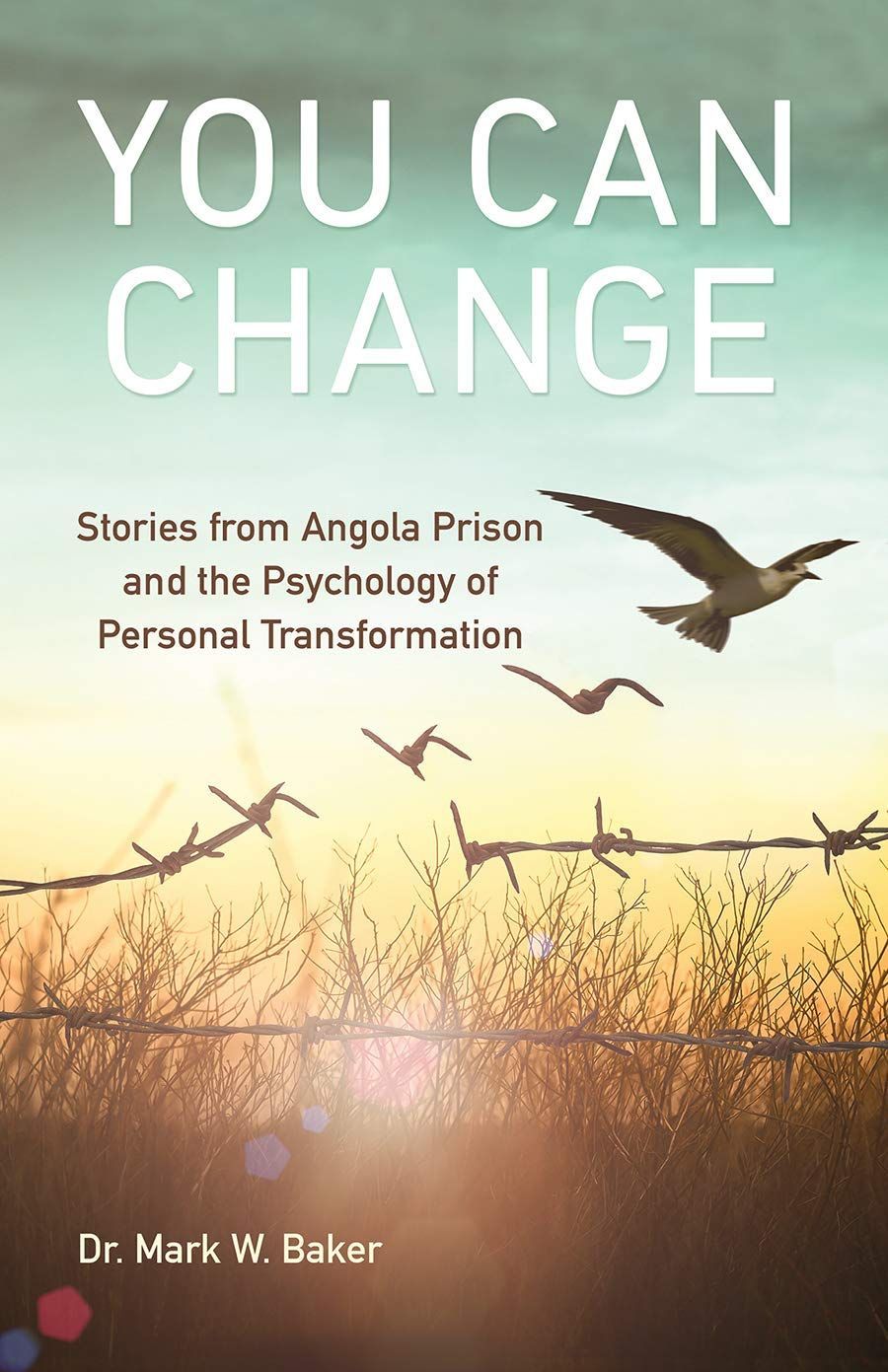
You Can Change

Can people make positive changes in their lives that really last? Dr. Mark W. Baker has been trying to answer this question for the past twenty-five years as a clinical psychologist. To discover the answer, he went on a quest to find people who have changed their lives in the most dramatic ways, ending up in the largest maximum-security prison in the United States, located in Angola, Louisiana.


Once the most brutal prison in the country, Angola was transformed into one of the most effective sites for rehabilitation in the United States. Baker uses stories from inside Angola, along with his decades of experience as a clinical psychologist, to share with readers the amazing human potential for change and personal growth. Drawing on themes of forgiveness, community, justice, hope, and spirituality, Baker shows all of us how to change our lives for the better--no matter who we are or what we've done.


BUY ON AMAZON →

A book titled “THE BIBLE I KNOW” lying at an angle on a white background.

The Bible I Know

A BIBLE STUDY COURSE. The Bible I Know takes you on a riveting journey through the Bible. You’ll be challenged to take a close personal look at its truths and answer the question, "Is the Bible for today?" This common sense and practical approach to studying the Bible will challenge and inspire you to dig deeply into the mysteries of its truths for yourself. You will be captivated by discovering amazing love stories, drama of wars, family feuds, floods, murder, and intrigue, as well as enjoy the inspiring poetry and psalms that feed your soul.Discover for yourself how the words of the Bible are Holy Spirit inspired. The Bible I Know invites you to know in a profoundly intimate way that your heavenly Father, loves you and has always loved you. He lovingly inspired men of old to pen His words and leave a written legacy for His children. In plain language The Bible I Know helps you understand where you came from, who you are, and where you’re going.


BUY ON AMAZON →


PSF Overview


The video presents a comprehensive overview of the Prison Seminaries Foundation initiative, starting with Burl Cain's life and his tenure as warden at the Louisiana State Penitentiary (Angola). Through interviews, it highlights the program's influence on students and the broader incarcerated community, both at Angola and in prisons across other states.

A New Morning at Parchman


A summary of student life within the seminary program at the Mississippi State Penitentiary (Parchman), drawing on research conducted by Pepperdine University.

Sunrise over misty trees with text “Faith & Flourishing on Parchman Farm”

Faith and Flourishing on Parchman Farm


Discover the narratives of students and staff impacted by the prison seminary in Mississippi. A compelling showcase of the research conducted at the Mississippi State Penitentiary (Parchman) by Baylor University.

Burl Cain Legacy


A review of Burl Cain's life and work within the corrections system, the inception of the seminary-in-prison movement, and its impact on both students and the cultural landscape of prisons.

Creating Ministers


From convicted killers to ministers of the Gospel, lives are being changed in Texas prisons.

Seminary Graduation in TX


Experience the 2019 Graduation at Darrington Prison in Texas and see lives changed.

PSF in Colorado


Accounts from both staff and students involved in the seminary program in Colorado highlight the profound impact of the Gospel in prison.

A Grander Vision


The Global Leadership Summit offers an insight into the prison seminary program at the Louisiana State Penitentiary (Angola).

Fox News on PSF


Franklin Graham discusses the connection between the Graham family and the seminary in prison movement.

Articles and Research

(Additional Bibliography on Seminary Programs in Prisons)


Two Corrections Today magazine covers with people on the front, one blue and one gray.

The Value of Seminaries in Prison

In 1995, Burl Cain, currently Commissioner of the Mississippi Department of Corrections, became the warden at the Louisiana State Penitentiary at Angola. Angola, once called “the bloodiest prison in America,” was an out-of-control, maximum security prison of 6,000 incarcerated, with daily violence and hopelessness every where. Commissioner Cain often says he was not well equipped to know how to fix the problem, but he knew God could. He contacted the New Orleans Baptist Theological Seminary, and they began training inmates at Angola in 1995 in liberal arts, ministry and biblical studies. The ongoing seminary’s purpose is to train inmates to be ministers to their fellow inmate peers.

Naval Postgraduate School logo with blue and gold crest, Monterey, California

Seminaries in The System: The Effects of Priosn Seminaries on Recidivism, Inmate VIolence, and Costs

Rehabilitation is one of the main goals of the correctional system, with numerous and varied programs being implemented for centuries. The United States spends millions on rehabilitation programs, yet recidivism rates, prison violence, and correctional costs continue to rise. This thesis explores how prison seminaries are addressing these issues and in the process, changing inmates’ attitudes and behaviors. Examining Angola, the first prison seminary that became a model for many subsequent prison seminaries, including interviews with inmates and prison staff, reveals how inmates’ attitudes and behaviors changed as a result of their seminary. Similar programs that follow Angola’s model were also reviewed to determine if there was a reduction in acts of violence and a change in inmates’ prosocial behaviors as a result of the programs. This thesis analyzed quantitative evidence in the form of prison statistics and inmate conduct records to determine if prison seminaries lower rates of recidivism as well as inmate violence. Legal case studies were used to evaluate the constitutionality of prison seminaries. Finally, this thesis identified reasons why prison seminaries are changing the overall culture of prisons, including individual identity transformations, the activities of inmate ministers, and participation in religious activities. The findings reveal prison seminaries are reducing both recidivism rates and inmate violence, which reduces the overall costs of incarceration.

Blue cover of The Prison Journal, with large title text and a pale arrow graphic.

U.S. Prison Seminaries: Structural Charity, Religious Establishment, and Neoliberal Corrections

Using archival and site-based research, this article explores operational practices at six U.S. prison seminary programs regarding concepts of religious establishment. Further highlighted is a shift toward faith-based volunteerism as a “structural charity” in correctional budgeting. While religious programs offer powerfully transformative access to social capital for many inmates, the recent insertion of Christian “seminaries” into U.S. prisons arguably fosters religious establishment in four key areas: a lack of state neutrality toward religion, excessive state entanglement with religious service providers, inadequate solicitation of alternative programming, and a de facto measure of coercion in delivery of services.

Journal cover for International Journal of Offender Therapy and Comparative Criminology with blue striped globe logo.

“First Stop Dying”: Angola’s Christian Seminary as Positive Criminology

This article offers an ethnographic account of the “self-projects” of inmate graduates of Louisiana State Penitentiary’s (aka “Angola’s”) unique prison seminary program. Angola’s Inmate Minister program deploys seminary graduates in bivocational pastoral service roles throughout America’s largest maximum-security prison. Drawing upon the unique history of Angola, inmates establish their own churches and serve in lay-ministry capacities in hospice, cellblock visitation, tier ministry, officiating inmate funerals, and through tithing with “care packages” for indigent prisoners. Four themes of positive criminology prominently emerge from inmate narratives: (a) the importance of respectful treatment of inmates by correctional administrations, (b) the value of building trusting relationships for prosocial modeling and improved self-perception, (c) repairing harm through intervention, and (d) spiritual practice as a blueprint for positive self-identity and social integration among prisoners.

Blue icon with a white chalice and flame next to the word “religions” in teal italic text

Capitalizing on Religious Pluralism in U.S. Prison Ministry: Lessons from LSP Angola’s Inmate Seminary

The renewed growth of immersive “faith-unit” programs operating inside U.S. maximum-security prisons has brought with it a heightened emphasis on the practice of religion in correctional settings. Modeled from a prototype Christian seminary planted inside Louisiana State Penitentiary Angola, newer programs utilize outside religious educators for the credentialing of inmates into work assignments on behalf of prisons. As resource-challenged wardens deploy religiously credentialed inmates for leading new forms of prison ministry inside state facilities, research has not kept pace with the rapid growth of programs. Based on previous research, this article offers a retrospective account of the establishment of “offender ministries” at the Angola prison seminary planted at Louisiana State Penitentiary in 1994. While correctional leaders are obliged to accommodate the diverse religious identities of prisoners, private sponsors of immersive religious programs must balance doctrinal fealty with religious pluralism. Drawing from fieldnotes and on-site interviews in previous research, lessons from the history of Angola’s ecumenical prison seminary and “inmate ministry” programs are discussed while strengths and weaknesses are also highlighted.

Journal cover for Christian Higher Education with blue columns and white title text

Equipping Students for a “Specific Uprising” Toward Justice: Lessons Learned from a University Prison Initiative

Equipping students for citizenship has always been a core element of American higher education. Amid financial distress, changing technology, and global interconnectivity, the project of equipping citizens is becoming increasingly disembodied. Embracing the notion that one’s physical place matters, one application of an embodied practice has been the development of educational programs inside prisons in the United States. Beginning in 2015, Calvin University launched one such program inside the Richard A. Handlon Correctional Facility called the Calvin Prison Initiative (CPI) with the goal of extending Calvin’s mission to equip students to be “agents of renewal in the world.” The program offers opportunity for individual renewal through personal development in the context of a rigorous curriculum that culminates in a bachelors degree, as well as communal renewal through the transformation of the culture within the prison animated by the CPI students therein. After a description of the program and its context, this article describes a pilot study which sought to understand the impact of the CPI on its participants, particularly on how they see themselves as moral and spiritual leaders within Michigan’s prisons. Through analysis of 57 essay pairs—one when applying to the program, and one after a portion of the program was completed—the data suggest that CPI participants demonstrate growth in three key areas of personal, educational, and community formation. This article concludes with a discussion of implications for the program, future programmatic and research opportunities, and implications for embodied community engagement within Christian higher education writ large.

Blue cover of The Prison Journal, with large title text and a pale arrow graphic.

Prisoners Helping Prisoners Change: A Study of Inmate Field Ministers Within Texas Prisons

Research on incarcerated offenders trained to help prisoners change is rare because programs that equip inmates with practical capacities for helping others rehabilitate in prison hardly exist. An exception is the Field Ministry program in Texas, which enlists inmates who have graduated from a prison-based seminary to work as “Field Ministers” and serve other inmates in various capacities. We hypothesize that inmate exposure to Field Ministers is inversely related to antisocial factors and positively to prosocial ones. We applied manifest-variable structural equation modeling to analyze data from a survey of a random sample of male inmates at three maximum-security prisons where the Field Ministry program operated. We found that inmates exposed more frequently to the Field Ministry and for a longer time period tended to report lower levels of criminological risk factors and aggressiveness and higher levels of virtues and predictors of human agency as well as religiosity and spirituality.

Purple cover of ATLA Summary of Proceedings with geometric triangle pattern and white title text.

Supporting Incarcerated Seminary Students

How can we provide access to theological scholarship for students in a maximum-security prison? This session will discuss how the North Park library supports seminary students in two different Illinois correctional institutions. We discuss the founding and history of the School of Restorative Arts, how Brandel Library built and managed remote prison collections, and how we support the research and writing of these students. We will then discuss future plans for SRA library services and questions for seminary libraries to consider as they plan to serve incarcerated students. Finally, Tony Pizarro will share from his experience and work within the SRA program and as the assistant director of North Park’s Writing Center.